Brewboard
Problem
Developer productivity is fragmented across a minimum of three tools: a task tracker (Jira, Linear, Trello), a communication platform (Slack, Teams), and a calendar (Google Calendar, Outlook). Context-switching between these tools is itself a productivity cost. More critically, none of these tools correlate their data. Your task tracker does not know which tasks you repeatedly defer. Your calendar does not know which meetings consistently displace planned work. No tool surfaces the behavioral patterns that actually explain why work is not getting done.
Approach
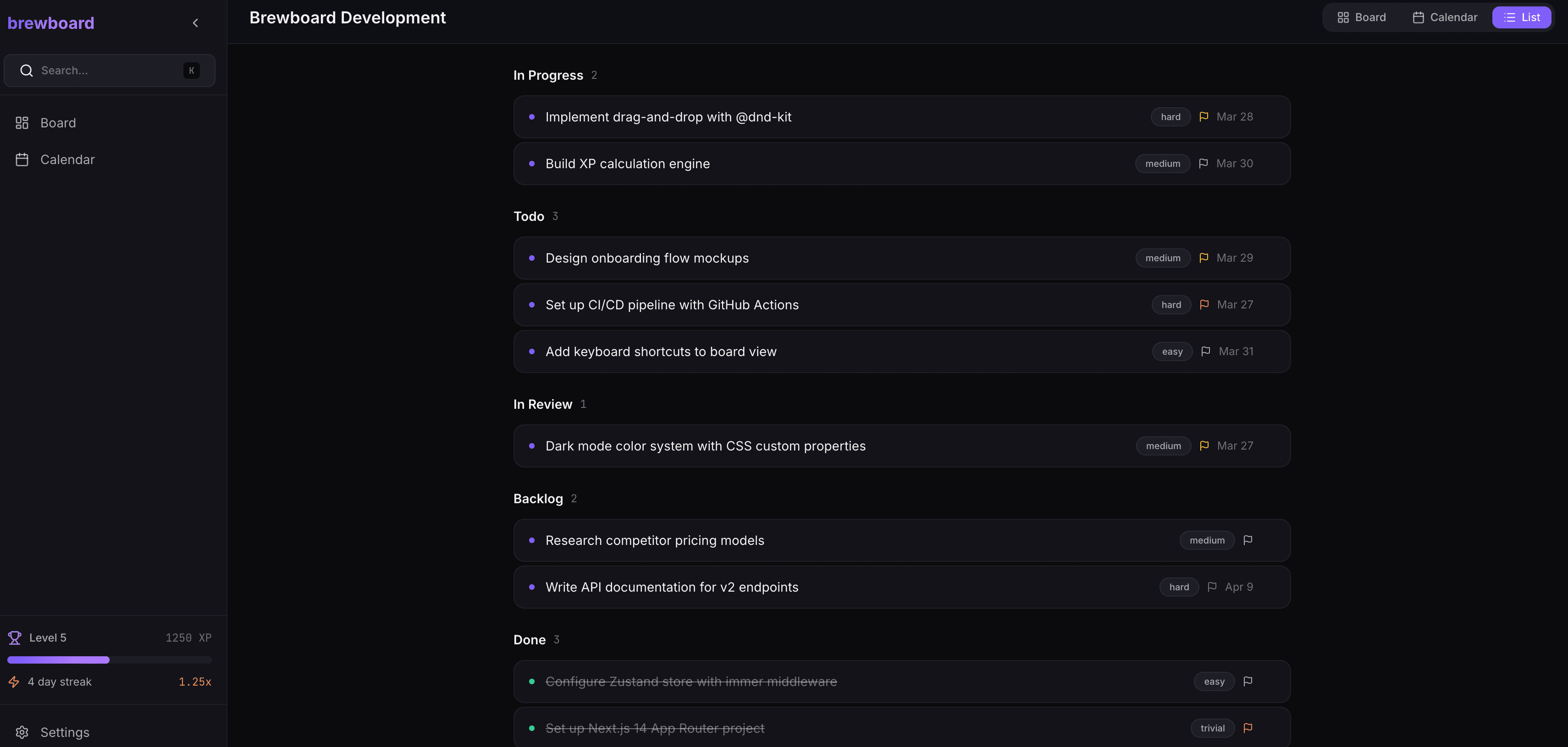
Brewboard unifies Kanban task management, team messaging, and calendar scheduling into a single interface. The core differentiator is the weekly review system: Brewboard tracks which tasks are punted — moved from one period to the next without completion — and surfaces this data as trend analysis.
If you defer the same task three sprints in a row, Brewboard tells you. If a particular category of work is consistently deprioritized, Brewboard quantifies it. The weekly review transforms procrastination from a vague guilt into an actionable dataset.
Implementation
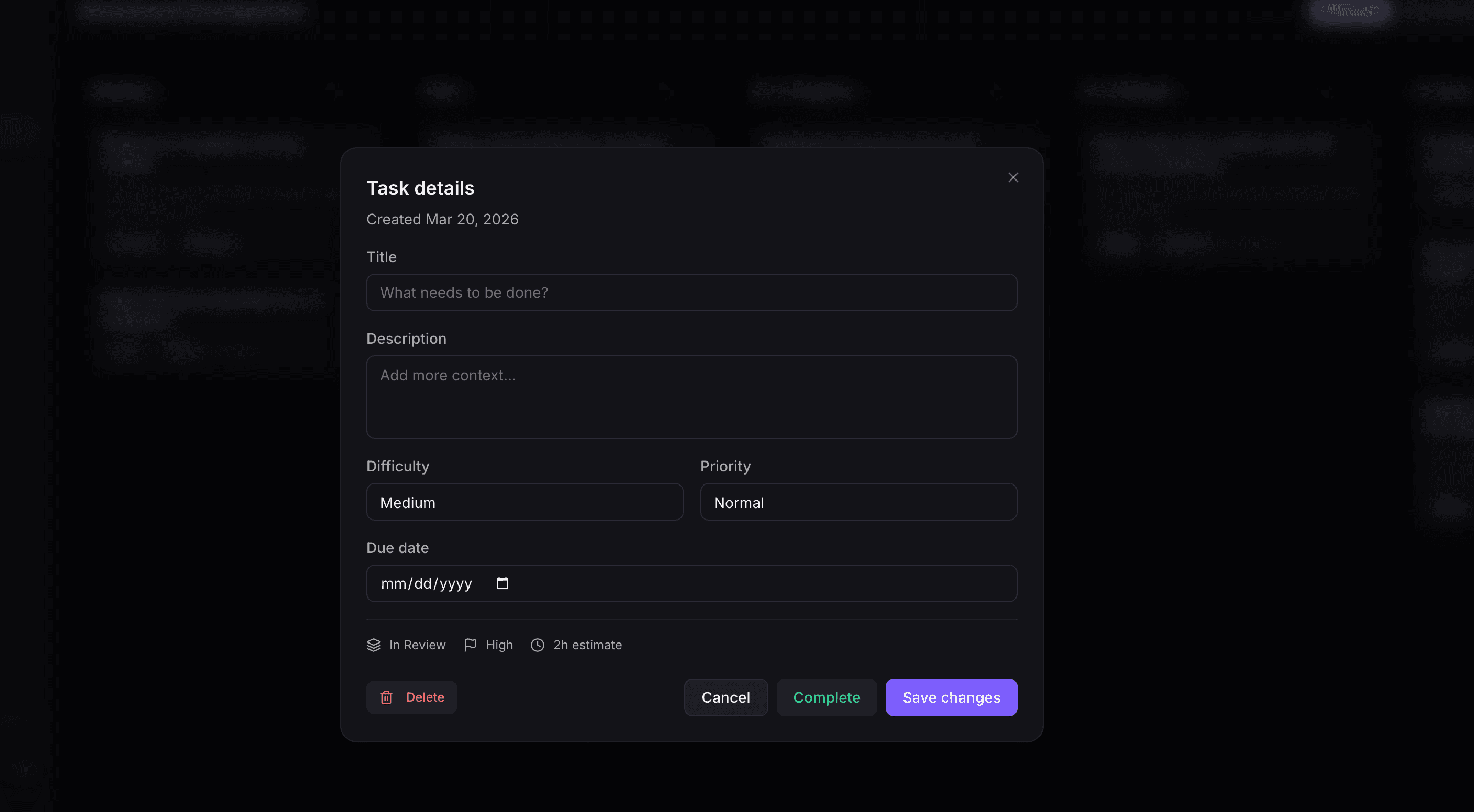
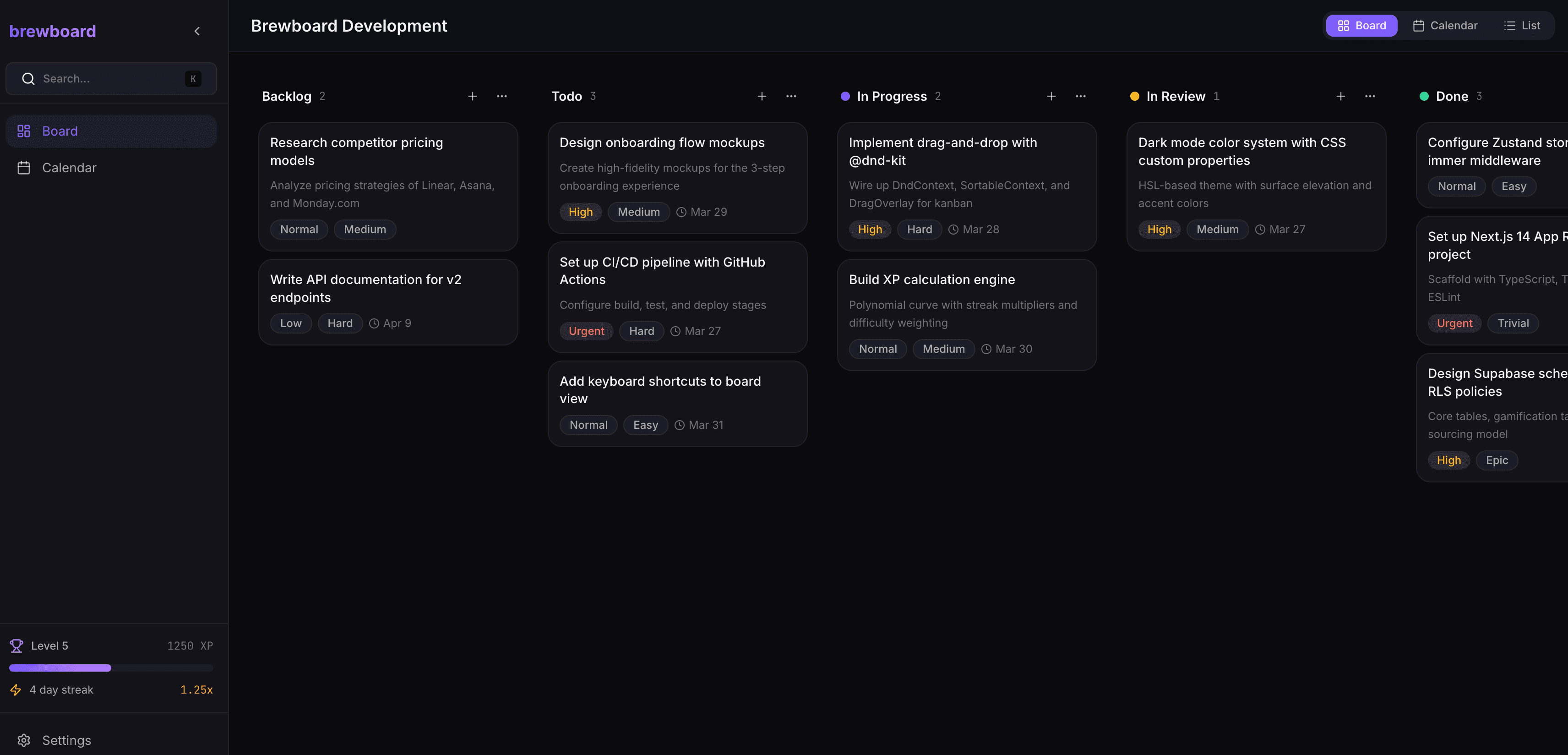
The Kanban board supports customizable columns, drag-and-drop task movement with state persistence, and automatic timestamping of every status transition. When a task moves backward (from "In Progress" back to "Backlog") or survives across weekly boundaries without completion, the punt counter increments.
The weekly review generates a structured report: tasks completed, tasks punted (with punt frequency), time-in-status metrics per task, and category-level trend analysis. This data surfaces patterns invisible in standard sprint retrospectives — not just "what did we finish" but "what do we keep avoiding and why."
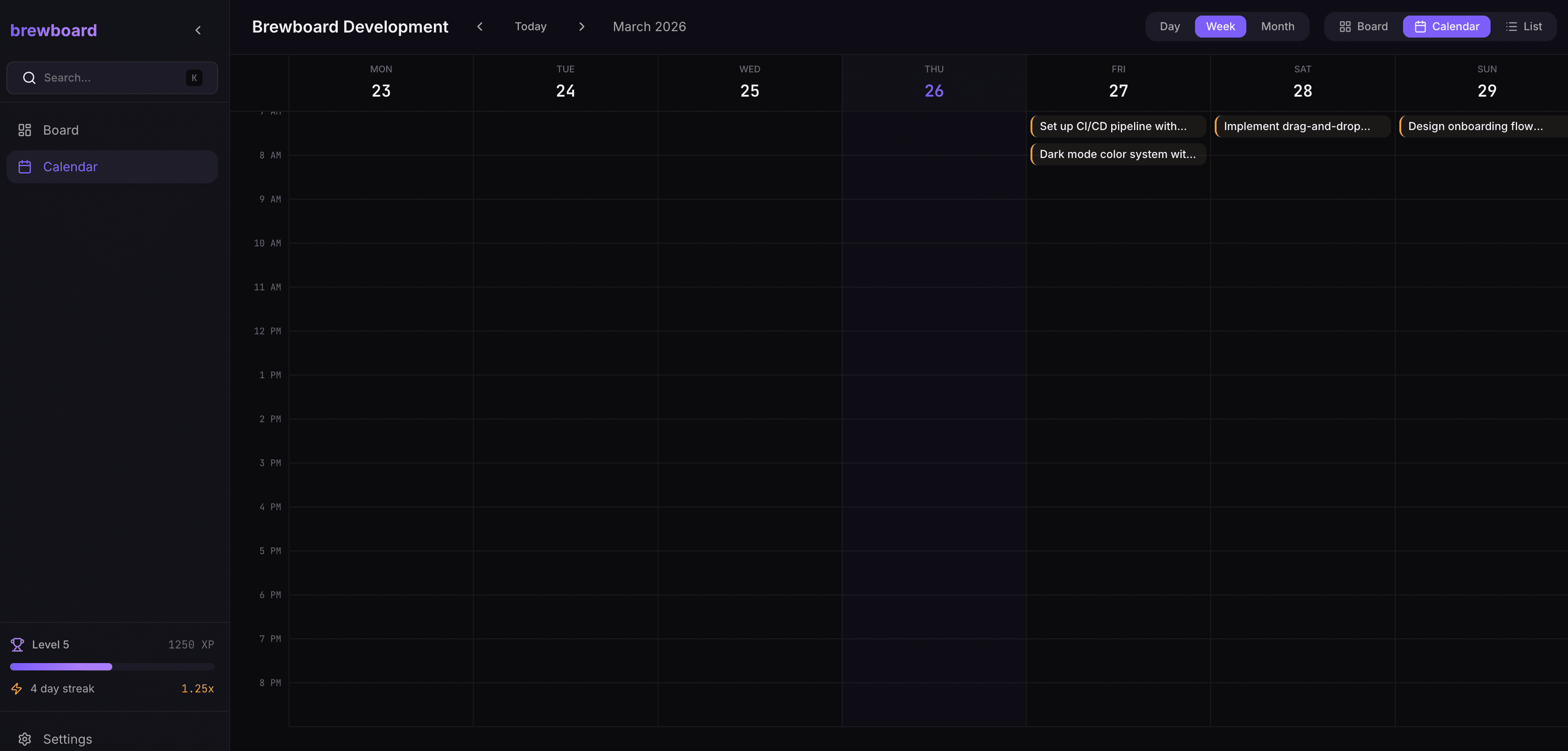
Calendar integration synchronizes scheduled blocks with task estimates, flagging over-committed days before they happen. The messaging layer is scoped to task context — conversations attach to specific cards rather than floating in general channels.
The system is designed for small teams and solo developers who need the analytical power of enterprise tooling without the configuration overhead.
Next.jsTypeScriptPostgreSQLReal-time WebSocketsKanban